Fire of Temptation

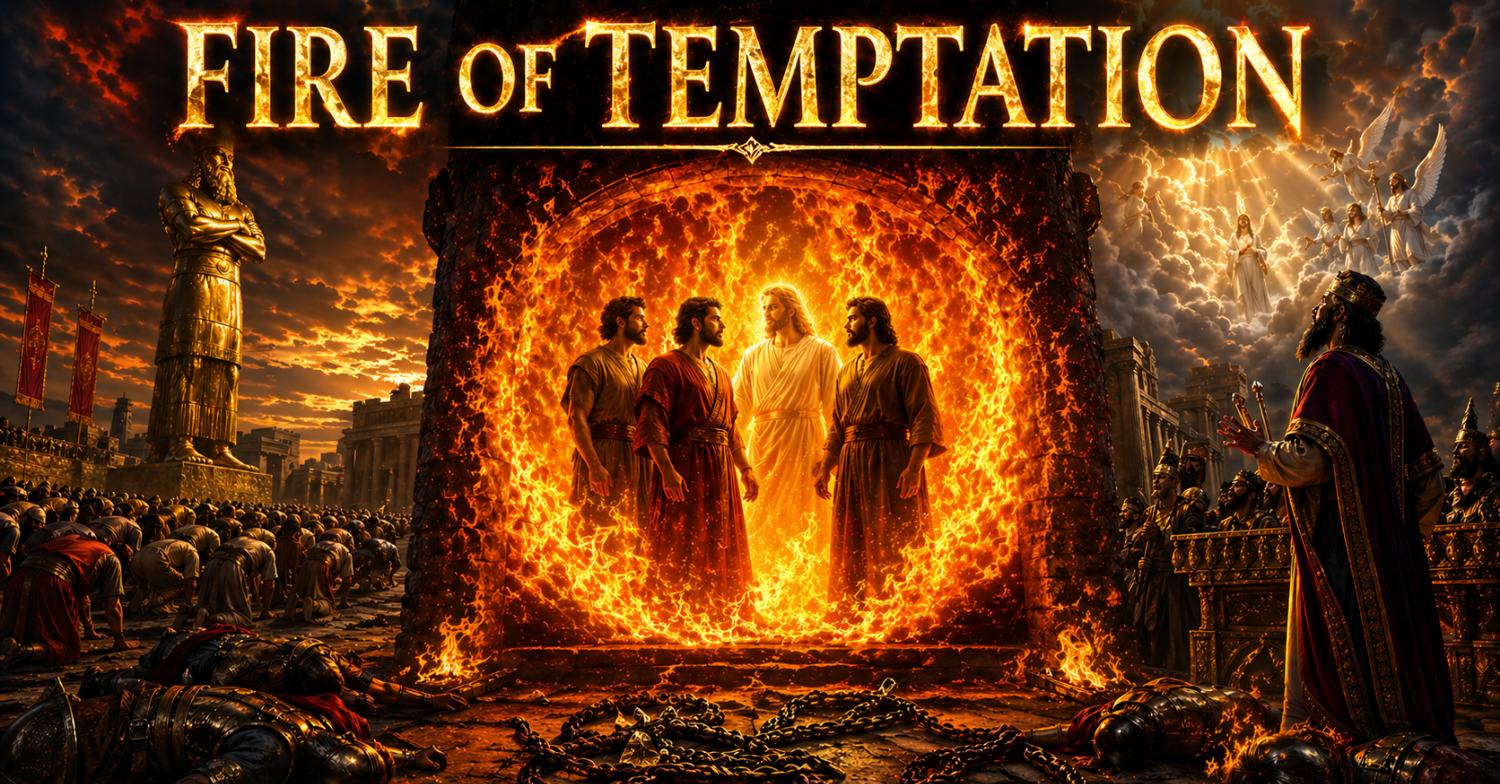
The Fire of Temptation: Standing Strong When the World Wants You to Bow
In a world that constantly pressures us to compromise our faith, the story of Shadrach, Meshach, and Abednego offers powerful lessons about standing firm in our convictions. Their experience in Daniel chapter 3 reveals that temptation isn't just about avoiding sin—it's about who wins your worship in the middle of pressure.
When False Worship Systems Are Set Up
King Nebuchadnezzar constructed a massive golden statue—90 feet tall and 9 feet wide—in the plains of Babylon. He commanded that when the music played, everyone must bow down and worship this idol, or face death in a blazing furnace.
The Enemy Builds Systems That Normalize Compromise
Just as Nebuchadnezzar created a system where everyone was expected to bow, our culture today has systems that normalize compromise. "'The whole world is under the sway of the wicked one'" (1 John 5:19). What we see as culture is often the result of demonic influence, pressuring us to accept what contradicts God's truth.
Spiritual Currents Move Through Culture
There's a spiritual current moving through our society that, if we don't intentionally stand against it, we will automatically drift. Ephesians 2 speaks of "the prince of the power of the air" whose spirit works in disobedience. Most of the world follows this current without realizing they're being influenced to compromise their values.
We're called to be transformed by the renewing of our minds (Romans 12:2), not conformed to this world. Gossip, lust, strife, anger, bitterness, and jealousy—these things aren't acceptable anymore for believers, even though "everyone else is doing it."
When Our Obedience Exposes Others' Bondage
When Shadrach, Meshach, and Abednego refused to bow, certain Chaldeans came forward to accuse them. This reveals an important truth: our obedience often exposes what others are bound to.
We Don't Get Attacked for Fitting In
Jesus warned us: "'If the world hates you, know that it hated me before it hated you'" (John 15:18). We don't get attacked for fitting in—we get attacked for standing out. As the world gets darker, Christians become brighter, making our differences more apparent.
Accusation Attempts to Rewrite Our Identity
The accuser of the brethren works through people to challenge our identity in Christ. Revelation 12:10 describes Satan as the one "which accused them before our God day and night." When we stand for truth, accusation often follows as the enemy's attempt to make us question who we are in God.
How the Enemy Sets Traps for Automatic Compromise
King Nebuchadnezzar offered Shadrach, Meshach, and Abednego a second chance to bow when the music played. This reveals how the enemy sets traps, expecting automatic compromise when pressure increases.
Temptation Hides in Emotional Triggers
"'But every man is tempted when he is drawn away of his own lust and enticed'" (James 1:14). Temptation often hides inside emotional triggers of the flesh and the natural mind. This is why we need our minds renewed—because we can be easily triggered by undealt-with issues.
Pressure Often Increases Before Breakthrough
When the three Hebrew men refused to compromise, Nebuchadnezzar ordered the furnace heated seven times hotter than usual. Sometimes when we get closer to God and refuse to bow to culture, things might get worse before they get better.
When Spiritual Warfare Becomes Visible
The three men declared: "Our God whom we serve is able to deliver us from the burning fiery furnace... But if not, let it be known to you, O king, that we do not serve your gods" (Daniel 3:17-18).
Real Faith Doesn't Need Proof
Spiritual warfare becomes visible not by what we feel, but by what we say. Real faith doesn't need proof—it stands on God's promises. These men said "even if He doesn't deliver us," showing that their faith wasn't dependent on their circumstances.
When Eternity Is Your Focus, Pressure Loses Its Power
"'Be faithful until death, and I will give you the crown of life'" (Revelation 2:10). When eternity becomes our focus, temporary pressure loses its power over us. We need not just faith to stand, but endurance to keep standing.
Victory After the Fire
When King Nebuchadnezzar looked into the furnace, he saw four men walking around unharmed—and the fourth looked like "the Son of God." The three Hebrew men emerged completely untouched, without even the smell of smoke on them.
Fire Destroys Bondage, Not Believers
"'When you walk through the fire, you shall not be burned'" (Isaiah 43:2). The fire had permission to destroy the ropes that bound them, but not the believers themselves. They went in bound but walked out free. What the enemy meant to trap them, God used to transform them.
Your Trial Is Heaven's Opportunity for Public Revelation
The three men didn't just survive—they were promoted to higher positions in Babylon. "'After you have suffered a while, [He] will perfect, establish, strengthen, and settle you'" (1 Peter 5:10). What tried to destroy them actually qualified them for greater things.
Life Application
This week, identify the "golden statues" in your culture that demand your worship—whether it's materialism, popularity, comfort, or compromise. Choose to stand firm in your convictions, even when everyone else is bowing down.
Remember that you're not just going through fires; you're revealing who you belong to. When pressure comes, declare like Shadrach, Meshach, and Abednego: "Our God is able to deliver us, but even if He doesn't, we will not bow."
Ask yourself these questions:
- What areas of my life am I tempted to compromise because "everyone else is doing it"?
- Where do I need to take a stand, even if it means facing opposition?
- How can I prepare my heart to say "even if He doesn't" when facing difficult circumstances?
- What "ropes" of bondage in my life need to be burned away in God's refining fire?
The fire of temptation isn't just about what you'll avoid—it's about who will win your worship when the pressure is on.
Love Pastor Steve