Demolishing Mental Strongholds

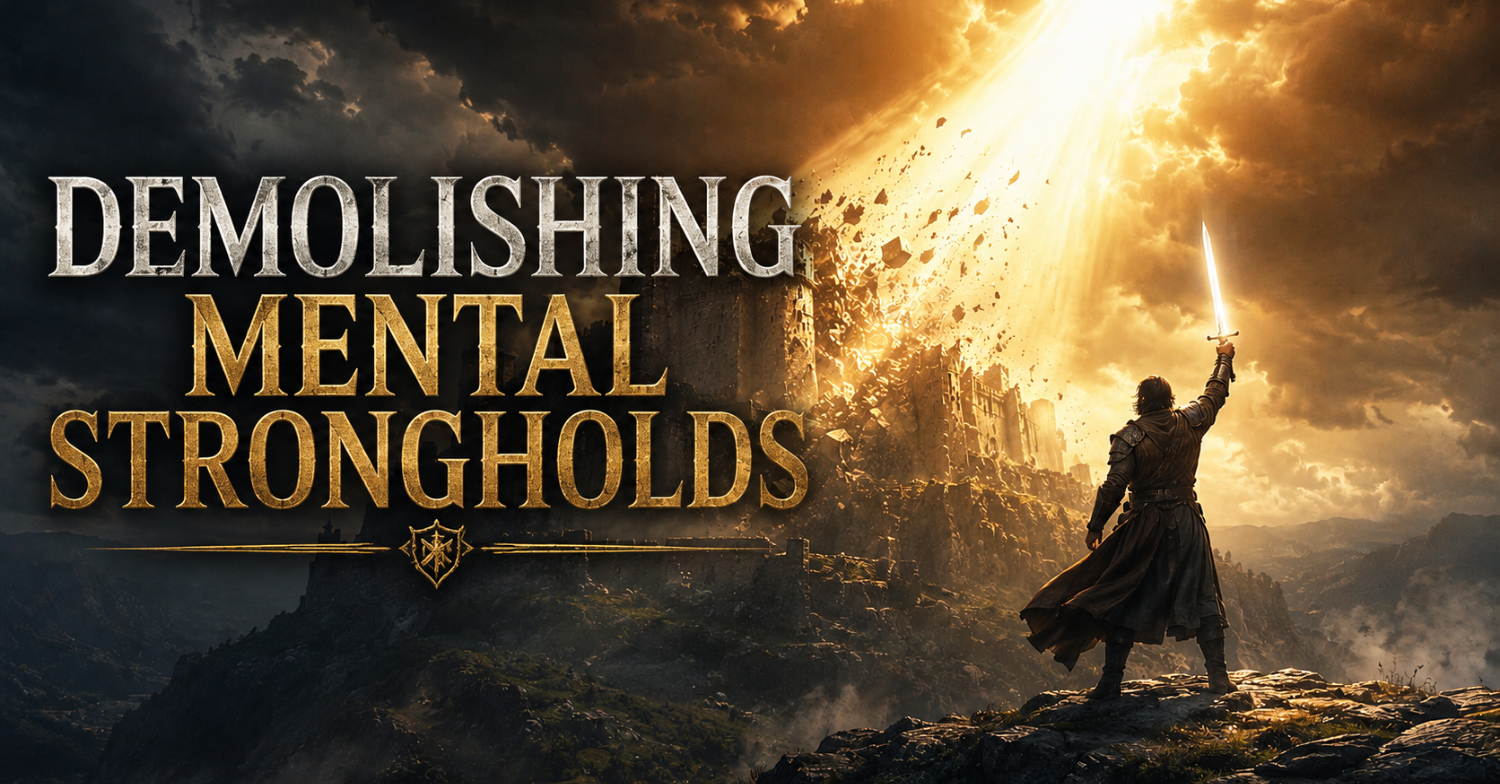
Demolishing Mental Strongholds: Breaking Free from Fortress of Lies
Mental strongholds can feel like impenetrable fortresses in our minds, but they don't have to remain there forever. Just as King David conquered the stronghold of Jerusalem despite the Jebusites' mocking, we too can demolish the mental barriers that hold us captive.
What Is a Mental Stronghold?
A stronghold is a fortress of lies built in the mind and emotions. It's a place of captivity, confinement, and imprisoned thinking. These aren't just random thoughts - they're systematic patterns that shape how we respond to life's challenges.
In Second Samuel 5:6-10, we see the Jebusites mocking David, saying "'You shall not come in here, but the blind and the lame will repel you,' thinking David cannot come in here. Nevertheless, David took the stronghold of Zion, that is the city of David."
How Strongholds Form
Strongholds often begin with trauma, abuse, or repeated negative experiences. Even when we're innocent victims, these experiences can hand us "bricks" that build walls in our minds. The enemy uses our emotions and flesh to construct these mental prisons.
We must understand that 95% of our thinking comes from our subconscious mind. This is why Romans 12 tells us to "be transformed by the renewing of your mind." We're not just dealing with actions - we're dealing with programming.
The Stronghold That Resists You
Romans 8:5-6 reveals the battle: "For those who live according to the flesh set their minds on things of the flesh, but those who live according to the Spirit, the things of the Spirit. For to be carnally minded is death, but to be spiritually minded is life and peace."
When Strongholds Become Houses for Demons
Strongholds can become dwelling places for demonic influence. Demons understand that repeated thoughts form beliefs, beliefs drive behavior, and behavior reinforces the stronghold. It's a destructive cycle that continues until we break it.
Not every thought in our mind is necessarily ours. Just as Jesus told Peter, "Get behind me, Satan," recognizing the source of certain thoughts, we must discern what thoughts align with God's truth.
The Stronghold You Don't Recognize
Perhaps the most dangerous strongholds are the ones we can't see. In John 8:31-36, Jesus encountered people who claimed they had "never been in bondage to anyone," despite their obvious captivity to sin and foreign powers.
Living in Deception While Sitting in Truth
"'And you shall know the truth, and the truth shall make you free'" - John 8:32. But notice verse 36: "'Therefore if the Son makes you free, you shall be free indeed'" - John 8:36.
There's a crucial difference between the touch of Jesus and the truth of Jesus. The touch deals with demons instantly, but the truth deals with strongholds gradually. It's a process that requires our active participation.
The Stronghold You Tolerate
Second Timothy 2:4 warns: "No one engaged in warfare entangles himself with the affairs of this life, that he may please him who enlisted him as a soldier."
Living Below Your Inheritance
The parable of the prodigal son reveals two types of bondage. While everyone focuses on the younger son who left home, the older son represents those who live in the Father's house but never access their inheritance. The father told him, "'Son, you are always with me, and all that I have is yours'" - Luke 15:31.
You can live in God's house and still never live like His child. Complacency is settling beneath what's available to us. We have "exceedingly great and precious promises" (2 Peter 1:4) that we often leave untouched.
The Stronghold You Must Fight
Matthew 12:29 teaches us: "'How can one enter a strong man's house and plunder his goods unless he first binds the strong man? And then he will plunder his house.'"
From Slave to Soldier Mentality
We must transition through different mindsets:
- Slave mentality: victim thinking
- Survivor mentality: wilderness thinking
- Soldier mentality: sonship thinking
Just as Israel had to drive out enemies in the Promised Land after being delivered from Egypt, we must actively confront the strongholds in our minds. They don't leave quietly - they resist and mock us, saying we'll never overcome them.
Taking Every Thought Captive
Thoughts must be taken captive, or those thoughts will take control. We cannot possess God's promises while thinking like we're in bondage. Problems persist when our priorities are poor.
The Stronghold That Falls
Second Corinthians 10:5 gives us our battle plan: "Casting down arguments and every high thing that exalts itself against the knowledge of God, bringing every thought into captivity to the obedience of Christ."
Our Weapon: The Word of God
Mental strongholds can only be broken by the truth of God's Word. As Jeremiah 23:29 declares, "'Is not My word like a fire?' says the Lord, 'And like a hammer that breaks the rock in pieces?'"
We need both a weapon (God's Word) and commitment to the process. Like David, who said "Bless the Lord, O my soul" when his mind wanted to resist worship, we must speak God's truth over our thoughts.
Anointing Plus Discipline
While anointing alone drives out demons, anointing with discipline deals with strongholds. It's a process that requires repetition of truth to create transformation.
James 4:8 instructs us: "Draw near to God and He will draw near to you. Cleanse your hands, you sinners; and purify your hearts, you double-minded."
Life Application
This week, identify one mental stronghold that has been resisting you. It might be unforgiveness, fear, lust, anger, or negative self-talk. Begin confronting it daily with God's Word rather than tolerating its presence.
Remember: we don't defeat strongholds by avoiding them - we defeat them by confronting them. What you fight today will not control you tomorrow, but you must engage in the battle with both God's Word and the Holy Spirit's power.
Questions for reflection:
- What repeated thought patterns have I been tolerating that don't align with God's truth?
- Am I living like a victim, survivor, or soldier in my spiritual life?
- What specific Bible verses can I use as weapons against the strongholds in my mind?
- How can I move from just knowing God's truth to actively applying it in my thought life?